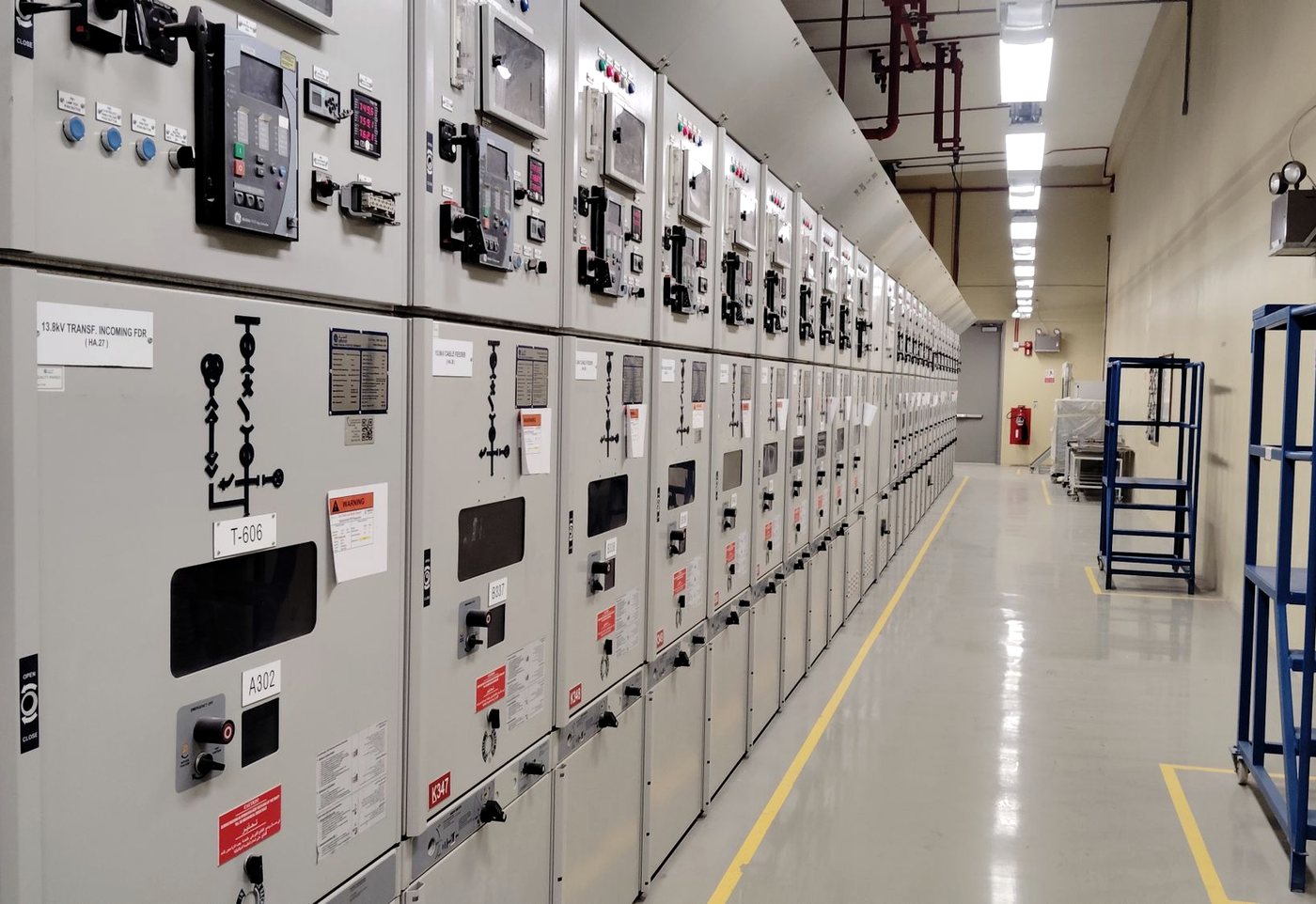
A cabinet, a machine tool, a paint booth, a grease duct: the hazard is enclosed, the space is tight and the budget rarely stretches to a piped room system. Local application is what these sites actually need.
Industrial fires are usually small, local and start inside a steel box. That is exactly the case a room-flooding system is worst at.
These fires start on the night shift, at the weekend or on a plant with three people on site. Nobody is standing beside the cabinet when a terminal starts to glow.
The fire is inside the enclosure. Agent released into the room cannot pass a closed door, a gasket or a cable gland — it has to be released inside the cabinet.
A piped system means a cylinder store, a manifold, pipework and penetrations through walls that were never designed for them. On a 600 mm cabinet that costs more than the equipment.
A powder cloud knocked down by hand is often followed by a second start from the same hot component. The release has to be automatic and it has to be close to the source.
A 6 mm polymer tube is charged and routed through the enclosure in reversing passes, so every component row has tube close to it. Heat softens the wall, the tube bursts at the hottest point, and the agent leaves a few centimetres from the fault.
Same principle, three mechanical answers. The choice is set by how much room there is inside the enclosure and how hot it gets in there.
Cylinder and tube inside the same enclosure. The shortest possible path from agent to fire, and nothing visible from outside the cabinet.
Cabinet mountedCylinder outside, tube routed in through a gland. Used where the enclosure is too small, too hot or too crowded for the container itself.
Remote cylinderWhere no tube can be routed at all — a sealed module, a small battery box — an aerosol generator covers the volume on its own bracket.
No tubingEvery layout on this page comes down to one of these three units. Each one detects, releases and stores its agent in the same housing, so nothing waits on a panel in another room.
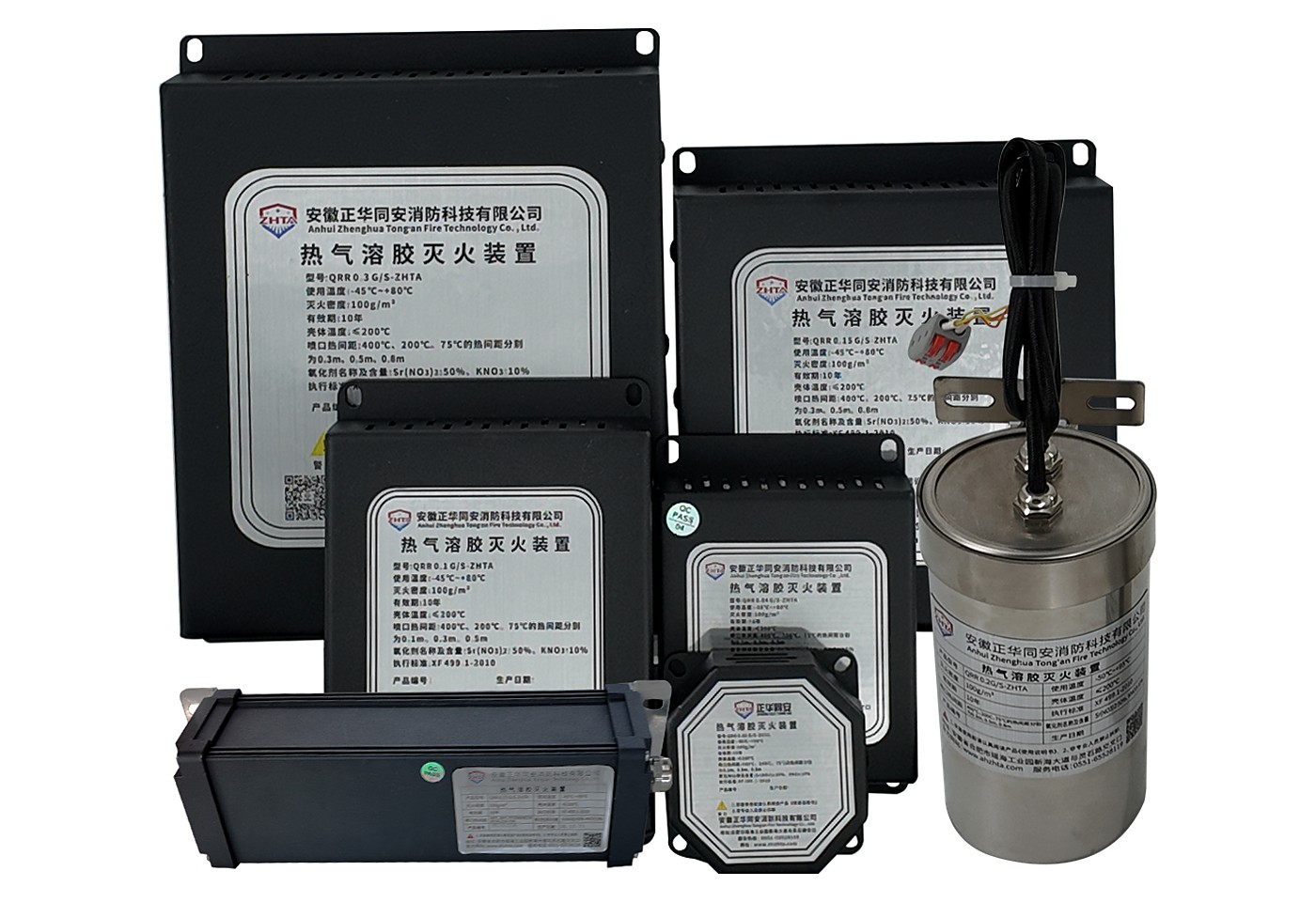
A sealed steel housing of solid aerosol-forming agent, bracketed to the wall or roof of the enclosure. On a start signal the charge ignites and the volume fills with aerosol in seconds — no pressure vessel, no pipework, and maintenance is a check of the thermal cord.
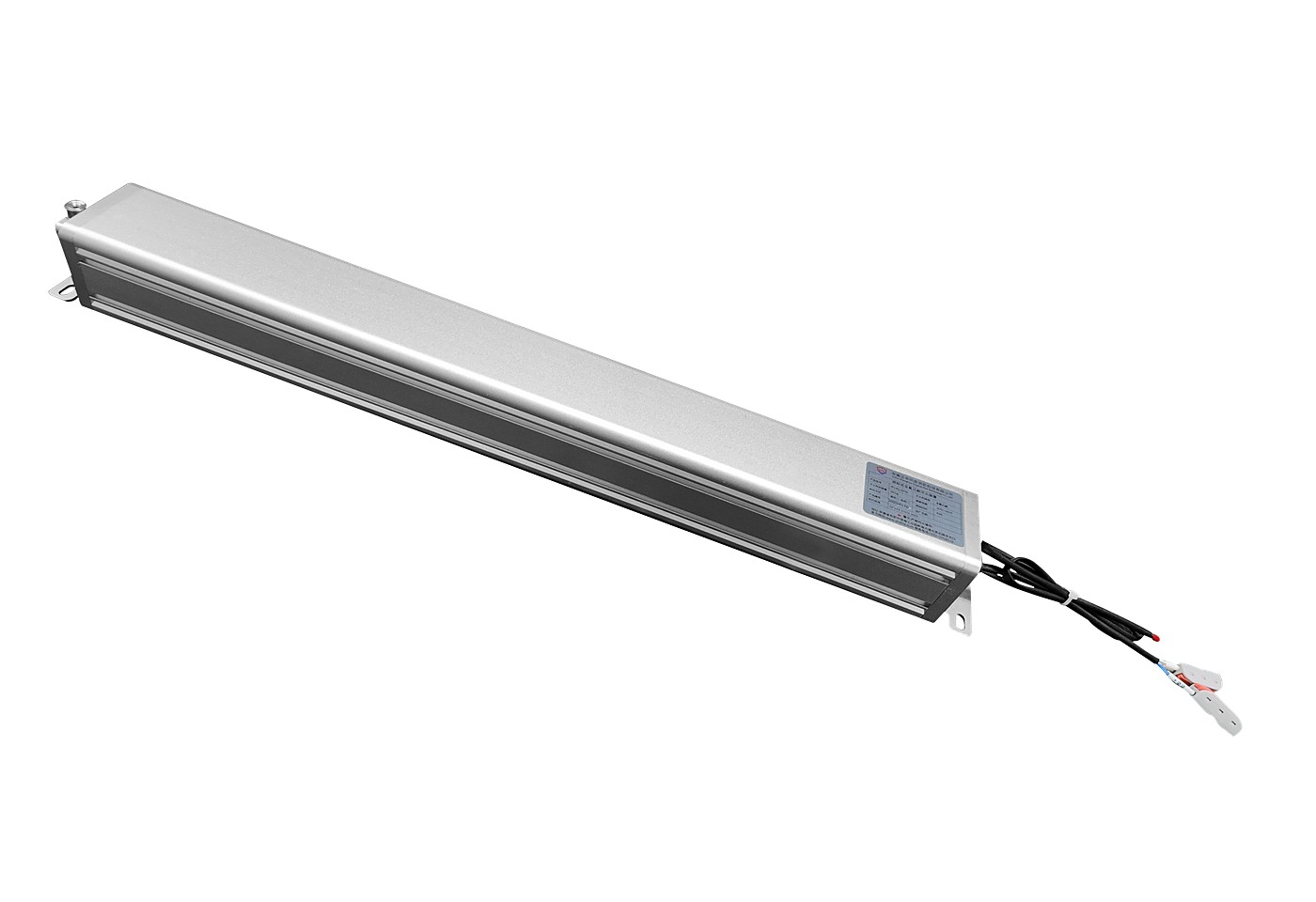
A slim aluminium body that bolts inside the rack or cabinet it protects: agent, gas generator and nozzle in one housing, carrying 200 g to 2.5 kg of FK-5-1-1 at atmospheric pressure. No cylinder room, no pipe run, and nothing to leak between services.
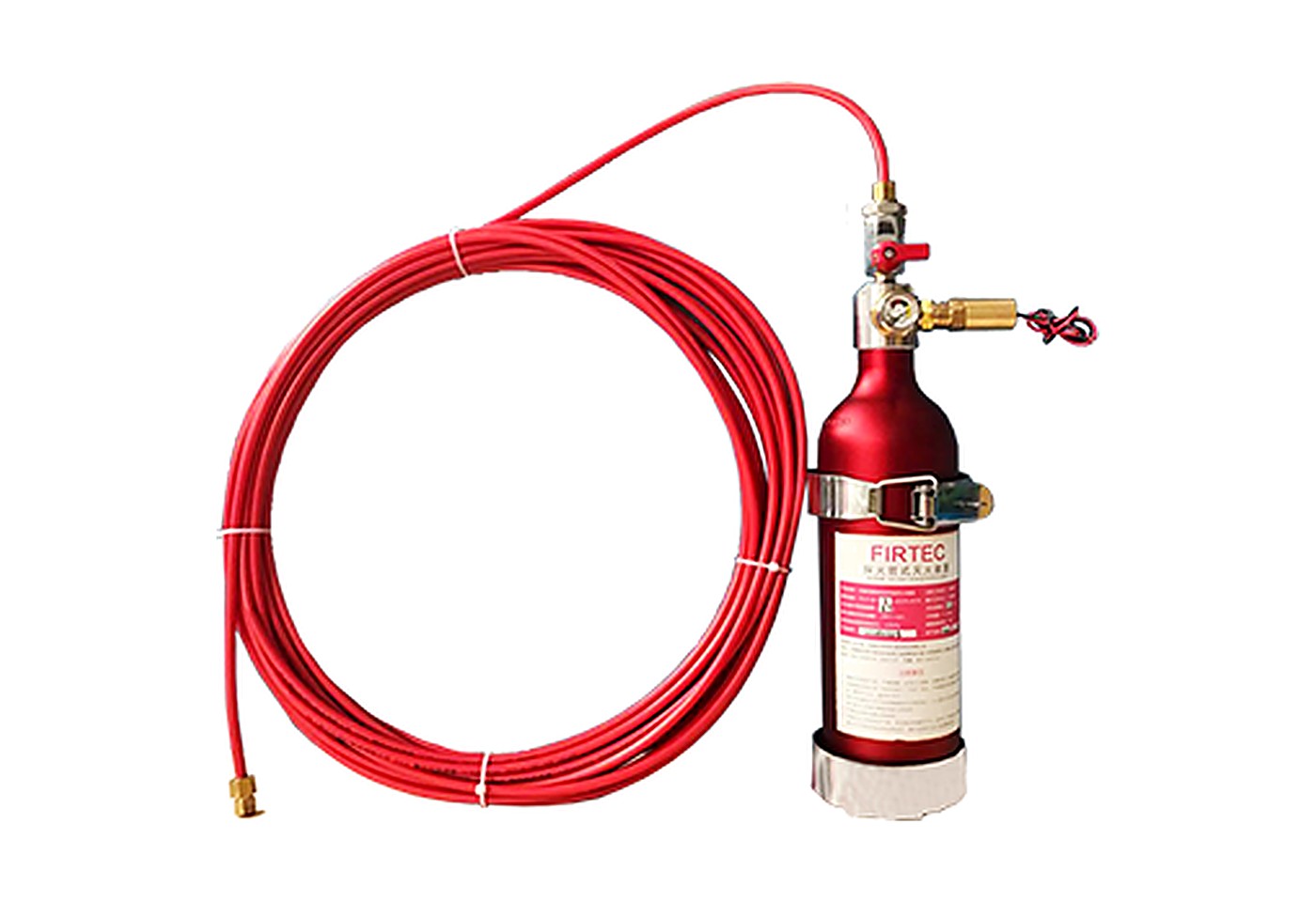
A pressurised polymer tube run through the cabinet in reversing passes, close to every component row. Heat softens the wall, the tube bursts at the hottest point and the agent leaves a few centimetres from the fault — no power, no detector head and no wiring inside the enclosure.
The same question every time: where does the fire start, and what is the shortest route from an agent container to that point?
| Switchgear & MCC | Direct — tube routed through the busbar and breaker compartments, one pass per section | HFC-227ea |
|---|---|---|
| CNC / EDM machine | Direct or indirect — tube across the machining envelope and the hydraulic pack | HFC-227ea |
| Paint booth & duct | Local application at the booth floor, duct protection at the filter bank | Dry powder |
| Commercial kitchen | Wet chemical at the hood and plenum, gas at the appliance and the gas valve | Other lines |
| Battery cabinet | Pack-level aerosol or FK-5-1-1 with detection inside the cabinet | Aerosol / FK-5-1-1 |
| Wind turbine nacelle | Suspended dry powder over the gearbox, brake disc and generator | ABC powder |
Enclosure volume, ventilation openings and the presence of a live busbar decide the arrangement, not the equipment category. Send a photo of the open cabinet and the internal dimensions and we will sketch the tube route on it.
A local application device has no panel, no battery and no solenoid. That is most of the reason it gets maintained instead of isolated.
Bracket and tube clips. No hot work, no wall penetration, and no shutdown of the cabinet beyond the time it takes to route the tube and clip it clear of moving parts.
One visitPressure gauge or weight check plus a visual pass on the tube — kinks, abrasion, heat damage. Annual, in the same visit as the cabinet service.
Annual checkThe tube is replaced and the container refilled or exchanged. There is no panel to reset, no valve to re-arm and no software to reload.
Back in serviceLocal application sizing is quick once we can see the enclosure. Without these four, any number would be a guess.
Internal dimensions and a photo of the open cabinet, so we can route the tube on paper first.
Which component overheats, and whether the tube can pass within about 100 mm of it.
Working temperature inside the enclosure, and whether dust, oil mist or coolant is present.
Whether the cabinet can be opened for installation, and who signs off the work at site.
We will come back with the arrangement, the agent charge and the tube route drawn on your own photo.

Open WeChat, tap + and pick Scan — the code opens a chat with our export desk. Not on WeChat? Message us on WhatsApp instead.
On a phone you cannot scan your own screen — long-press the code above, save it to your album, then open WeChat → + → Scan → Album.