The ASD series is a pipe-aspirating detector. Instead of waiting for smoke to drift up to a spot detector and thicken enough to scatter light, the unit pulls air out of the protected space through a pipe network and reads it inside a laser chamber. Air is moving the whole time, so a rising concentration appears as a trend before it is dense enough to be seen at ceiling level — which is the difference between a pre-alarm and a fire.
Two models share the platform. The ASD‑ZHTA102 has one address point, two sampling pipes and 2,000 m² of coverage; the ASD‑ZHTA204 has two address points, four pipes and 4,000 m². Both run stand-alone with their own power unit, or as a loop device on another manufacturer’s panel.
- Two sampling pipesOne run per address point, 100 m each, Ø25 mm OD.
- Laser scattering chamberObscuration in %/m, read against the baseline learned on commissioning.
- Status and touch keysSmoke level, airflow, pump speed; address and thresholds set from the front.
- Relay terminalsFive per address point — pre-alarm, action, fire 1, fire 2, fault — 3 A at 30 V DC.
- 295 × 220 × 97 mmMetal housing, 2.55 kg, −10 … +55 °C, replaceable filter cartridge.
Why sample the air instead of waiting for it
Three things push a conventional detector out of reach. Height: in a warehouse or an atrium the smoke is diluted by the time it arrives, and the detector is where nobody can test it. Obstruction: a rack aisle or a raised floor has no ceiling to mount on. Dilution: a cable void fills slowly, and by the time a point detector in the room sees anything, the void is already full.
A pipe solves all three the same way. The sampling holes sit where the smoke starts — above the racks, inside the void, along the tunnel — and the air is carried to one chamber that can be reached from the floor with a step ladder. Sensitivity stops being a property of where the detector could be fixed, and becomes a setting.
The path, in five steps
Holes
20 × Ø2 + 1 × Ø5Pipe run
Ø25 OD · 100 mFilter
cartridge, inletLaser
scattering chamberRelays
5 per address · 3 AOne continuous air path — the fan pulls, the chamber reads, the panel decides.
The chamber is the part worth understanding. Air passes a beam; particles scatter light sideways onto a photodiode; the signal is averaged and compared with the baseline the unit learned on commissioning. What the display shows is obscuration in %/m above that baseline, not a raw count — which is why the same unit can protect a dusty workshop and a manuscript store with nothing more than a different threshold.
Eight things the unit does
Sensitivity
A laser scattering chamber on a microprocessor-controlled air path reads roughly a thousand times finer than a point detector, so a warm cable or a smouldering joint raises a pre-alarm while the fault is still a smell.
Environment
The unit learns the background of the space it protects and follows slow drift — dust, humidity, seasonal load — instead of treating it as smoke.
Relays per address
Pre-alarm, action, fire 1, fire 2 and fault, each on its own relay rated 3 A at 30 V DC, wired straight into the panel or the plant.
Pipes per point
Two runs per address point. A room with two aisles stays one address in the panel, and the second run needs no second unit.
Aspirator pressure
The fan is matched to the pipe run and holds a set pressure, with adjustable speed for long or dirty runs, so flow stays flat as the filter loads.
Airflow
Flow is measured continuously against the learned baseline. A crushed, blocked or disconnected pipe is reported as a fault instead of becoming a silent blind spot.
Faults
Chamber, module, fan and wiring are supervised. A fault is reported with the point it belongs to, not discovered at the next inspection.
Event log
Fire, fault and setting events stay in the unit with date and time — the record the handover file and the insurer ask for.
102 or 204
The choice is arithmetic, not preference: count the address points the panel needs and the pipe runs the space needs, then pick the model that covers both.
| Parameter | ASD-ZHTA102 | ASD-ZHTA204 |
|---|---|---|
| Address points | 1 | 2 |
| Sampling pipes | 2 | 4 |
| Max pipe length | 200 m (2 × 100 m) | 400 m (4 × 100 m) |
| Sampling holes | 42 | 84 |
| Max coverage | 2,000 m² | 4,000 m² |
| Relays | 5 | 10 |
| Max current | 1 A | 1.5 A |
| Weight | 2.55 kg | 3.15 kg |
The full specification — pipe sizes, hole schedule, relay functions, power unit, temperature range — sits on the product page. If you are laying out a pipe network, send the drawing and we will mark the hole positions and the bend count on it before the quote is fixed.
Certification
The series is type-tested to GB 15631-2008 and holds CCCF approval, with two type-test reports covering the 102 and the 204. For an export tender that is usually not enough on its own, so the pack also carries the calibration record for each unit and a one-page English summary of both reports. If your authority asks for a standard we do not hold, say so before the order — it is cheaper to find out at quotation than at commissioning.
Where it goes
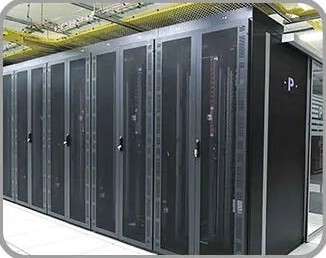
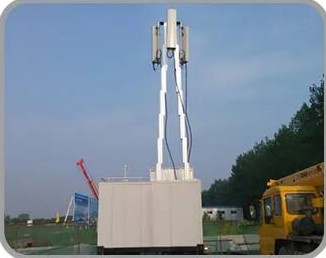
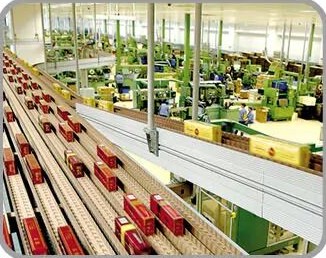

Cable tunnels, plant rooms, cold stores, atrium voids, heritage ceilings, clean rooms — anywhere smoke is diluted, unreachable or too valuable to wait for.
- ASD-ZHTA102 (1 address, 2 pipes, 2,000 m²) and ASD-ZHTA204 (2 addresses, 4 pipes, 4,000 m²) join the detection range.
- Laser scattering chamber, airflow supervised against a learned baseline, 40,000-event log, five relays per address point.
- Type-tested to GB 15631-2008 with CCCF approval; English test summary and calculation support go with the quotation.