SNEC 2026 — the nineteenth edition — ran from 3 to 5 June at the National Exhibition and Convention Center in Shanghai. We took the whole energy-storage range rather than a single product: gas detection, the station controller, cluster-level protection, PACK-level suppression and the monitoring that keeps the records. The show ended with two awards, and both of them were given for that chain rather than for any one box inside it.
Three days, one recurring question
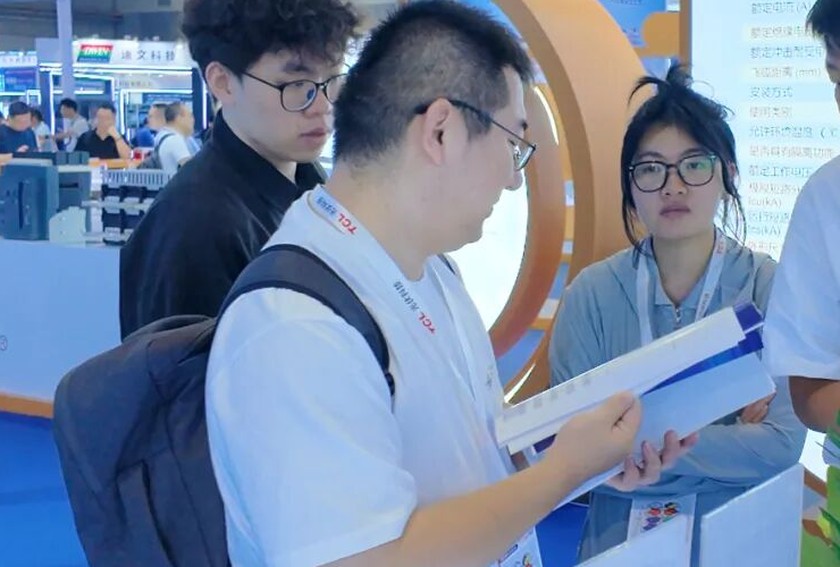
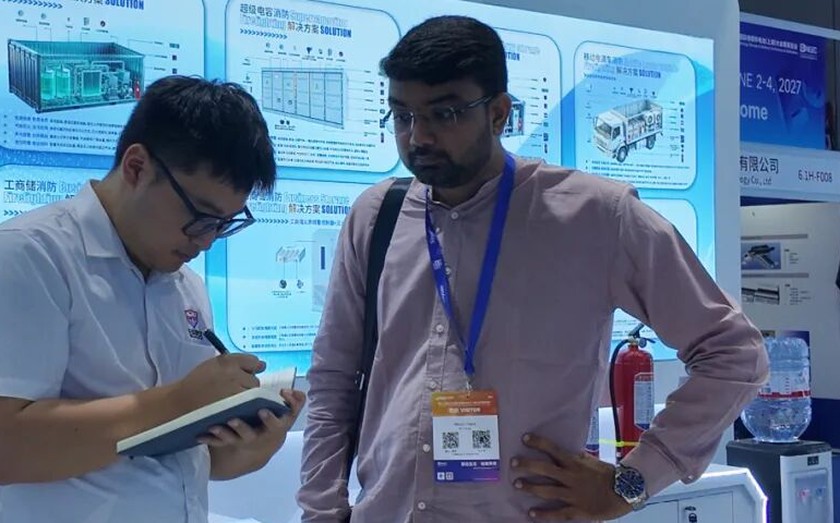
The stand stayed busy from the first morning: EPC contractors, integrators, cell and rack suppliers, and engineers who had walked over from the neighbouring halls. The same three questions came back in different words. Can the detection layer see a cell vent before CO and smoke arrive? Can a PACK unit be retrofitted into a rack that is already installed? And what does the current guidance on container layout change about zoning?
Those are the questions the system was designed around, so most conversations ended with a drawing rather than a brochure — the fastest way to show where a detection tube runs and what it protects.
The chain, level by level
Nothing in a container fire is stopped at one layer. Gas appears minutes before flame; the alarm has to reach the controller before the cell next to it vents; the agent has to arrive inside the module, not only in the aisle. The range is built in four layers for that reason.
Fire alarm controller
Addressable loops for gas, smoke and heat, with dry contacts out to the PCS and the plant SCADA.
Container protection
Agent distribution per cluster, manual release at the door, pressure and discharge feedback.
Module suppression
Per-module units that discharge into the module that vents, with the nozzle or tube inside the enclosure.
Monitoring layer
Event log, cylinder pressure and commissioning sheets — the file handed over at completion.
Around the hardware sit the parts that decide whether a site passes: modular deployment, so a rack can be added without re-piping the container, and lifecycle service — commissioning records, periodic inspection and cylinder replacement on a schedule the operator can audit. The energy-storage page carries the sizing detail; the four levels above are what the awards were given for.
The two awards
Two honours came out of the show. The first, the Global Smart Energy Award for Innovative Solution, was given to the energy-storage fire protection solution as a whole — detection, cluster protection and PACK suppression presented as one system. The second, a place in the SNEC 2026 Top Ten Highlights, came out of the same selection round.
An award is not a specification. But in a market where a buyer is asked to accept a suppression system on the strength of a datasheet, a judgement made outside the company is one more document for the tender pack — and one more reason for an integrator to shortlist a supplier they have not worked with before.
Global Smart Energy Award
Innovative Solution — the container-level storage fire protection system, judged on detection, zoning and suppression together.
SNEC 2026 · ShanghaiSNEC Top Ten Highlights
Honour award in the 2026 Top Ten Highlights selection — the same solution, entered in the show’s technical review.
SNEC 2026 · ShanghaiWhat a buyer can use
If you are specifying storage fire protection, three things from the show are worth asking any supplier for: the layer-by-layer scope — which of the four levels you are actually buying — the detection and discharge calculations for your container, and the certificate and award file. We issue all three in English, and a layout can be marked up against your rack drawing before the quote is fixed.
- Two awards at SNEC 2026: the Global Smart Energy Award for Innovative Solution, and a place in the Top Ten Highlights.
- Both were given to the four-layer chain — station controller, cluster protection, PACK suppression, records — not to a single device.
- Certificates, calculations and the award file are issued in English with the tender pack.