
one detector Smoke · Heat · CO · VOC · H₂ Parameters05One device
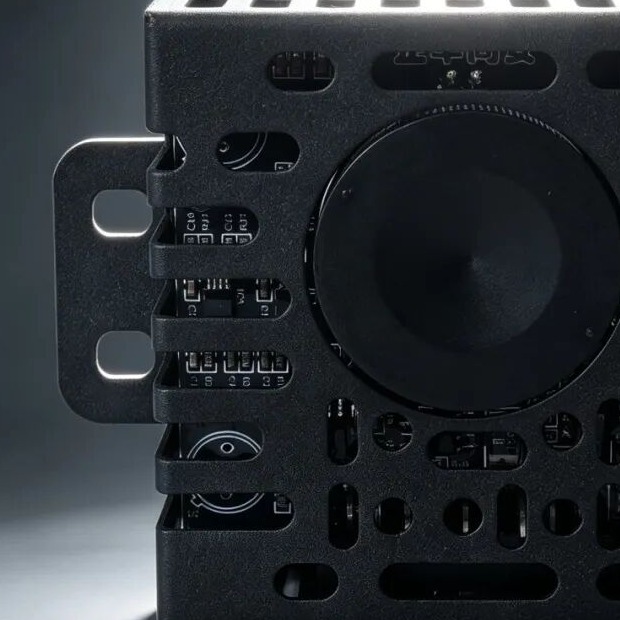
As storage scales, thermal runaway and deflagration have become the operating risk that owners actually lose sleep over. The reaction is quiet and chained: it releases hydrogen, VOC and then carbon monoxide, with temperature rise and smoke trailing behind. Single-parameter detection sees one slice of that sequence and arrives late. The direction of GB/T 46261-2025 is unambiguous — multi-parameter fusion, as early as the physics allows.
01 Why smoke, heat and CO are not enough
A conventional tri-gas detector — smoke, heat, CO — does give early warning. It still leaves a blind zone at the front of the event.
In the first minutes of a failing cell, the separator and electrolyte break down and release hydrogen and VOC ahead of CO, temperature rise and smoke. Hydrogen is flammable, diffuses extremely fast, and once it accumulates inside a cabin it can flash — a risk a tri-gas device simply cannot see. VOC is the signature of electrolyte leakage and mild cell pyrolysis, and it is what separates a real cell fault from humidity or dust interference.
Adding H₂ and VOC turns three independent readings into a five-parameter cross-check that covers the whole cycle: trace gas → gas accumulation → temperature climb → smoke and combustion. That is the gap being closed.
02 The five-in-one logic, stage by stage
Each element carries a different part of the timeline. The algorithm weighs them together rather than alarming on any single reading.
| Stage | What is happening in the cell | System response |
|---|---|---|
| Ultra-earlybest window | Micro-short circuit, mild electrolyte decomposition. No heat, no smoke, no CO. | H₂ and VOC sensors pick up trace gas first — the only window for preventing a flash deflagration. |
| Early pyrolysis | SEI layer breaks down, CO appears, cabin temperature climbs slowly. | Four-parameter check (H₂, VOC, CO, rate of rise) filters ambient noise → Level 1 alarm, ventilation on, unit derated. |
| Mid-stage | Heavy electrolyte volatilisation, VOC / H₂ / CO climbing, visible temperature rise, fine combustion aerosol. | Smoke module joins, five parameters agree → Level 2 alarm, faulted cluster isolated to stop propagation. |
| Late fire | Every parameter over limit — smoke, heat and hazardous gas together. | Level 3 fire alarm → power cut, cabin sealed, suppression released. |
03 Choosing the detector for the duty
The hardware has to survive a sealed cabin with flammable gas and heavy electromagnetic interference, so the selection points are specific.
H₂ and VOC sensing needs high sensitivity and real anti-interference: trace-level detection, automatic zero calibration, and drift control against temperature and humidity — otherwise the early alarms become nuisance alarms and get switched off.
CO, heat and smoke stay on energy-storage-grade high-precision modules, so that all five parameters hold their accuracy over years of unattended running.
For liquid-cooled packs fitted with an external detector, the housing must hold IP67 and run from −40 °C to 70 °C — north and south, summer and winter. Paired with the fire panel it should support data logging and remote diagnostics, which is what an unmanned station actually needs.
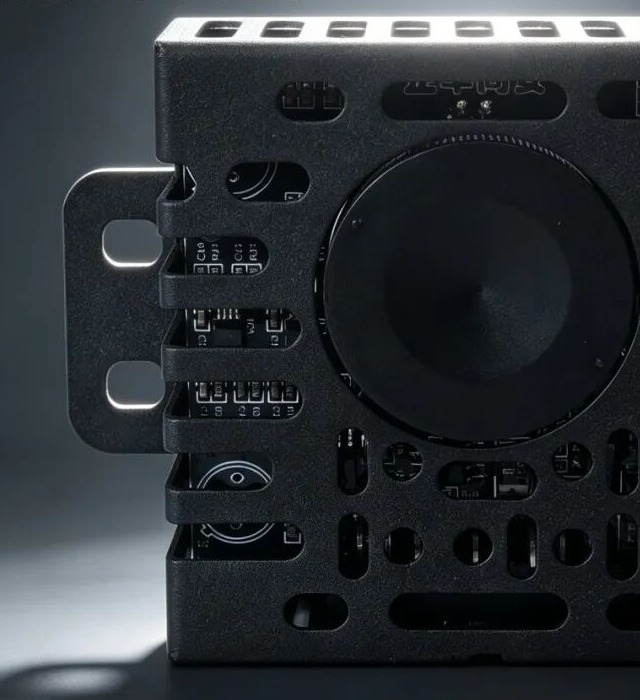
Built-in composite detector
Smoke · Heat · CO · VOC · H₂Mounted inside the battery cabin or pack enclosure, sensing the volume directly. Five elements on one board, one algorithm and one alarm path to the panel — the standard fit for new-build storage cabins.
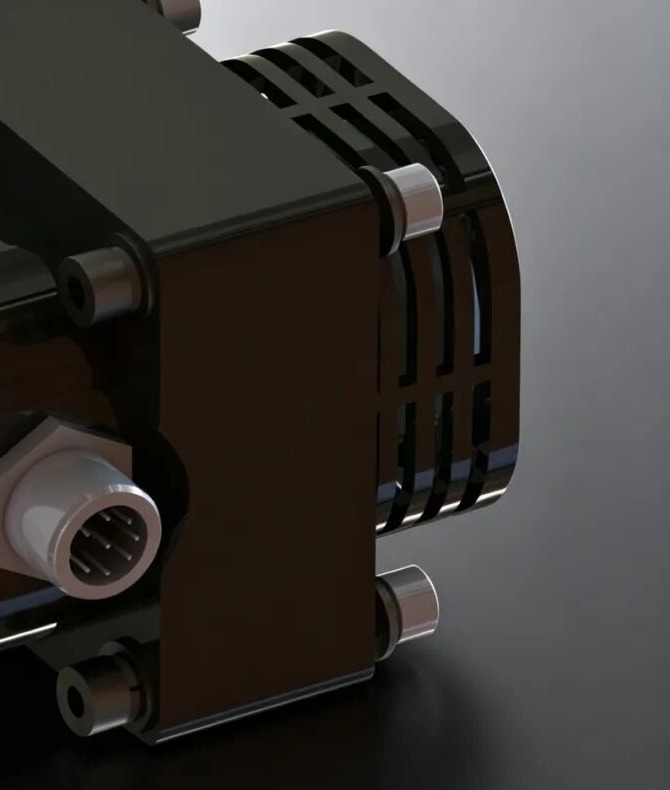
External composite detector
IP67 · −40 to 70 °CClamped to the outside of a liquid-cooled pack where the gas vents, sealed against washdown and spray. For retrofit work and for packs whose interior cannot be opened for a sensor.
04 Three-level alarm linkage
The panel does not treat every alarm the same. Three levels, three responses — so a single stray reading never discharges agent into an occupied cabin.
| Level | Trigger | Panel action |
|---|---|---|
| Level 1 | Any one of smoke, heat or CO over its threshold | Reported to the panel — no output linkage |
| Level 2 | Any two of the three over threshold | Sounder and flasher driven, one level of alarm linkage |
| Level 3 | Heat (mandatory) plus smoke and CO, all over threshold | Gas release, full-flooding suppression |
That structure is the whole argument. The five-in-one does not make the system more expensive to operate — it makes the early alarm trustworthy enough to act on, and the late alarm disciplined enough to suppress only when the evidence is there. Storage safety starts with the earliest gas signature; catching it is how a project moves from fire prevention to hazard prevention.
- Thermal runaway shows in gas before flame: hydrogen and VOC appear minutes before CO, temperature rise and smoke.
- Five parameters in one detector — smoke, heat, CO, VOC, H₂ — cover the whole cycle; tri-gas devices cannot see the earliest window.
- Selection turns on sensor sensitivity and zero-drift control, IP67 and −40…70 °C for external units, and the three-level alarm linkage into the panel.