
A sealed cabinet plus a suppression system is a pressure vessel. These are the parts that stop it becoming one — plus the one line that is not about enclosures at all.
When an agent discharges into a sealed enclosure the pressure has to go somewhere. A pressure-relief vent is the answer: it opens on the pressure rise, dumps the displacement volume, and closes again so the concentration holds. Without one, a defined-pressure cabinet either leaks through its own seals or deforms.
The explosion-proof wall fan is the other half of the same problem — moving air through a battery cabinet or a hazardous-area room without putting a spark source inside it. The kitchen suppression unit is the outlier on this page: a wet chemical system for cooking oil, which is a different fire and a different agent from everything else we make.
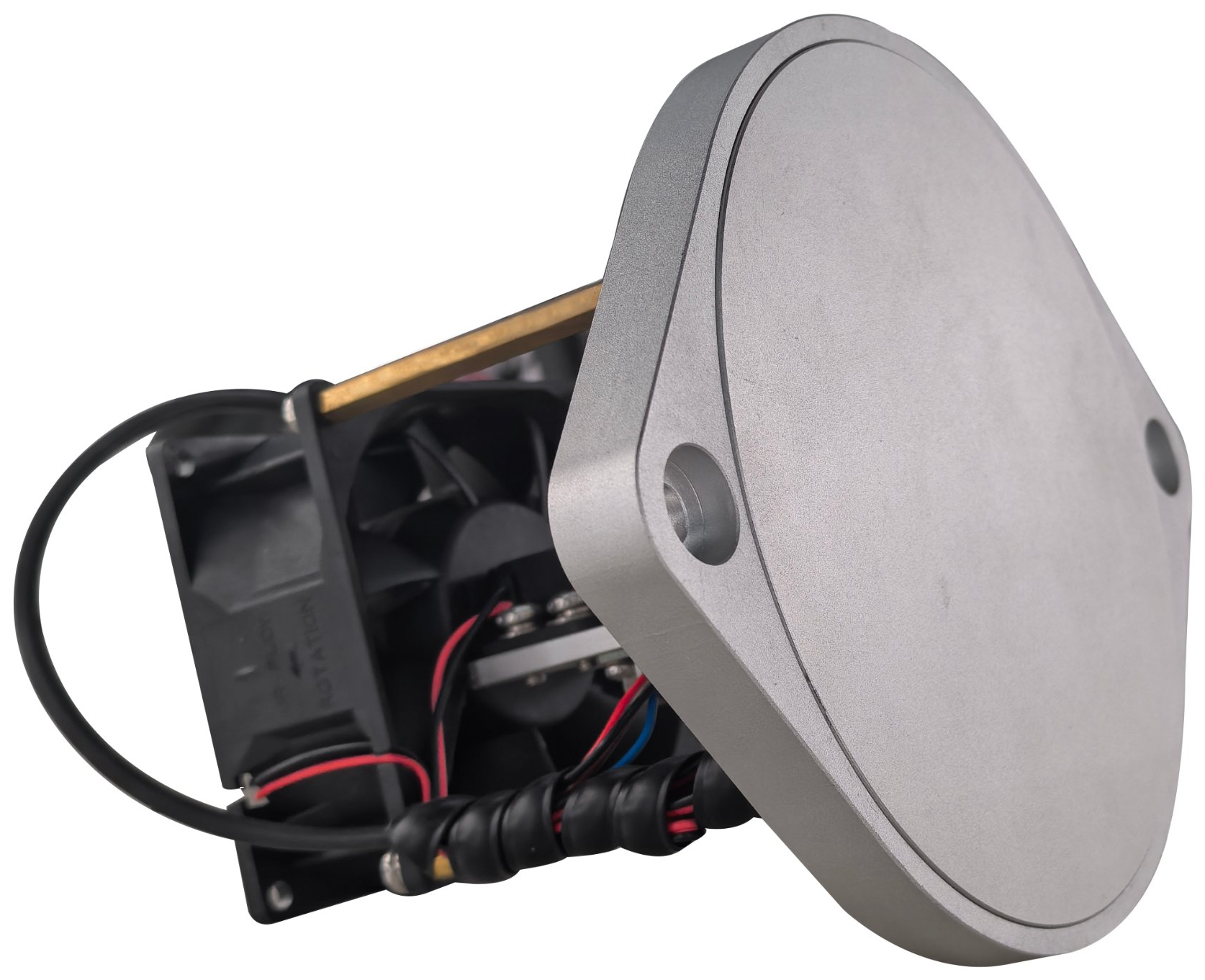
A motorised vent for containerised storage and battery packs: when a detector inside the enclosure passes its threshold, the control panel closes a dry contact, the actuator pushes the flap open 30 mm at 4 mm/s and the 80 mm fan starts, pulling the toxic and flammable gas out of the cabinet.
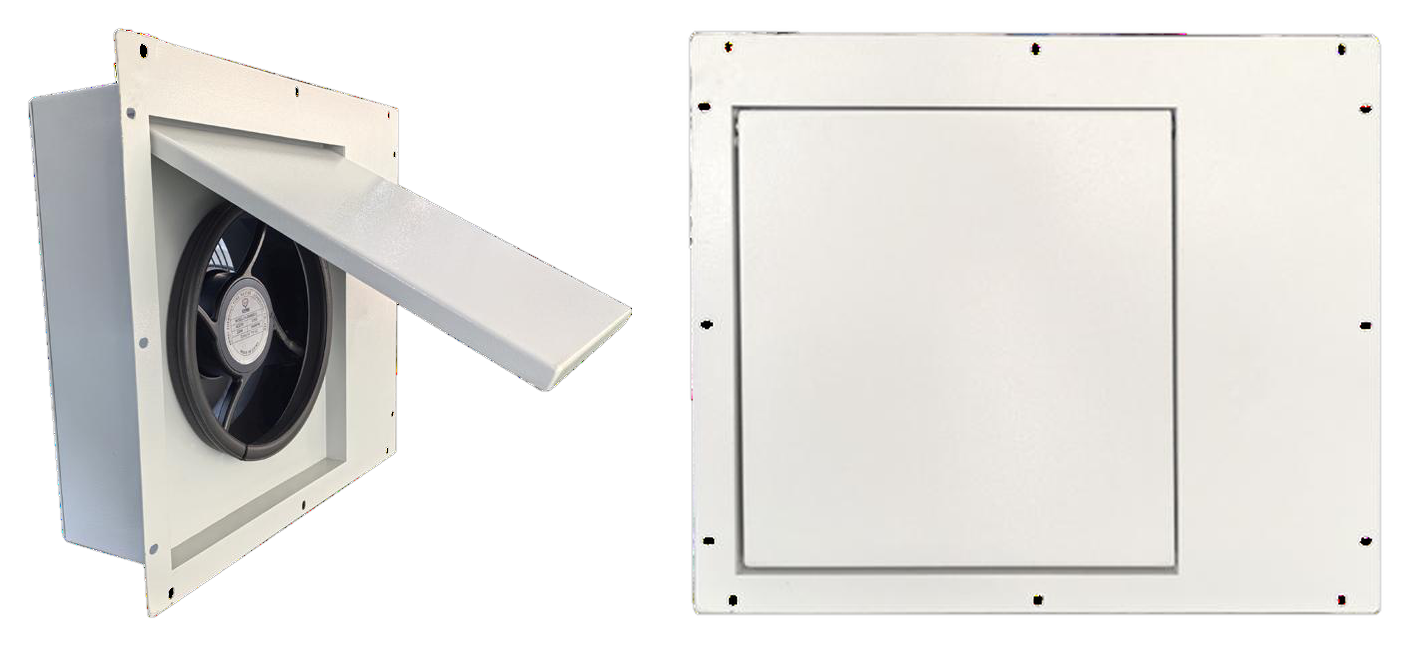
A louvred wall fan for containerised storage, built as a matched pair: ZH-400350CP exhaust and ZH-400350CJ intake.
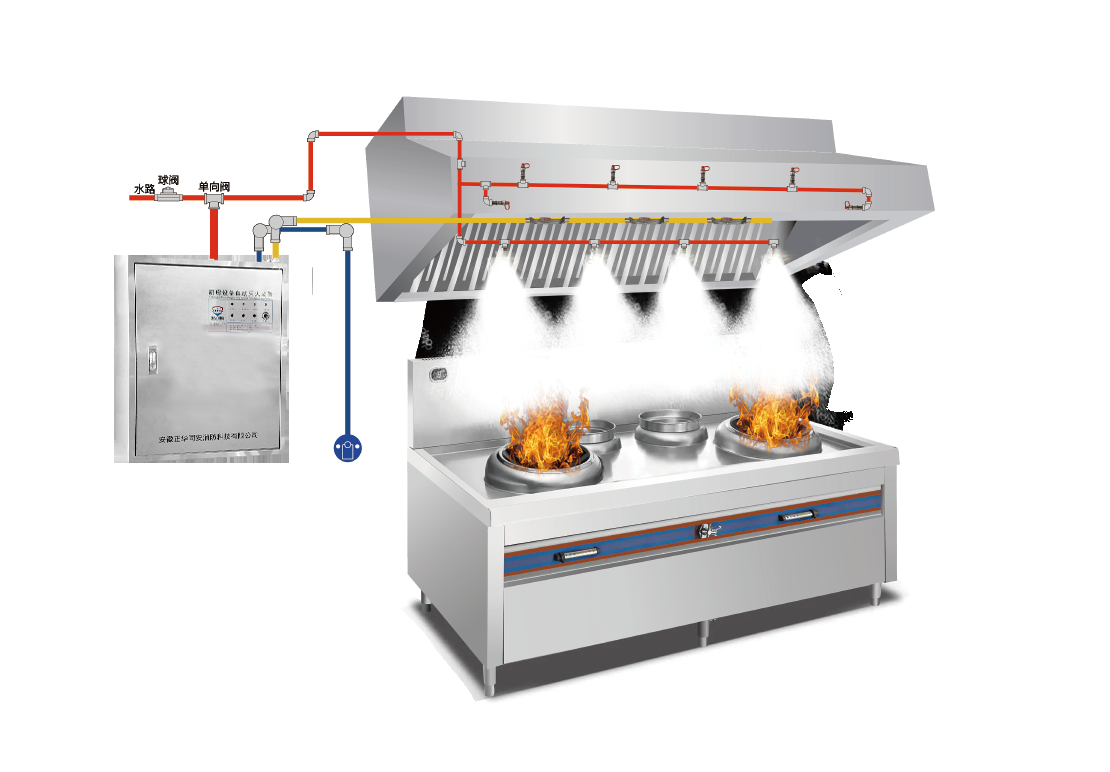
A wet chemical system for commercial kitchens: an agent cabinet, a nitrogen cylinder, pipework up into the hood and nozzles over the plenum and the cooking surfaces.
The agent is the easy half. The decision that actually changes the quote is the mounting format and what has to be built around it.
Electric push-rod actuator, sized to the enclosure volume so the discharge pressure does not exceed the cabinet rating. A CE-marked version is available.
ZH-400350, explosion-proof housing at IP66, up to 1,313 m³/h. Intake and exhaust as a pair, for battery rooms and cabinets that need forced ventilation in a hazardous area.
Wet chemical unit for hoods and ranges. Saponifies burning cooking oil rather than displacing oxygen — the only line here that is not an enclosure system.
Usually yes. Leakage through cable glands and door seals is not predictable enough to size against, and an undersized relief path is what deforms enclosures and blows gaskets. Size it from the enclosure volume and the agent mass, the same calculation that sizes the cylinder.
They solve different problems. The vent handles the pressure transient of a discharge. The fan handles continuous ventilation for off-gas removal and temperature control. A cabinet with a suppression system and no ventilation will hold accumulated off-gas; a cabinet with ventilation and no relief path will deform on discharge.
No. It is a wet chemical agent that saponifies cooking oil, because a Class K fire will not stay out with a clean agent or dry powder — the oil re-ignites. It is a separate product line with its own approval logic.
Yes, and that is how they are normally ordered: cylinder, relief vent and fan sized together against the same enclosure volume, so the three do not contradict each other on the submittal.
Send the room volume, the hazard and the standard you are designing to — NFPA, EN or GB — and the reply comes back with a sized system, a drawing set and a price, not a catalogue link.

Open WeChat, tap + and pick Scan — the code opens a chat with our export desk. Not on WeChat? Message us on WhatsApp instead.
On a phone you cannot scan your own screen — long-press the code above, save it to your album, then open WeChat → + → Scan → Album.