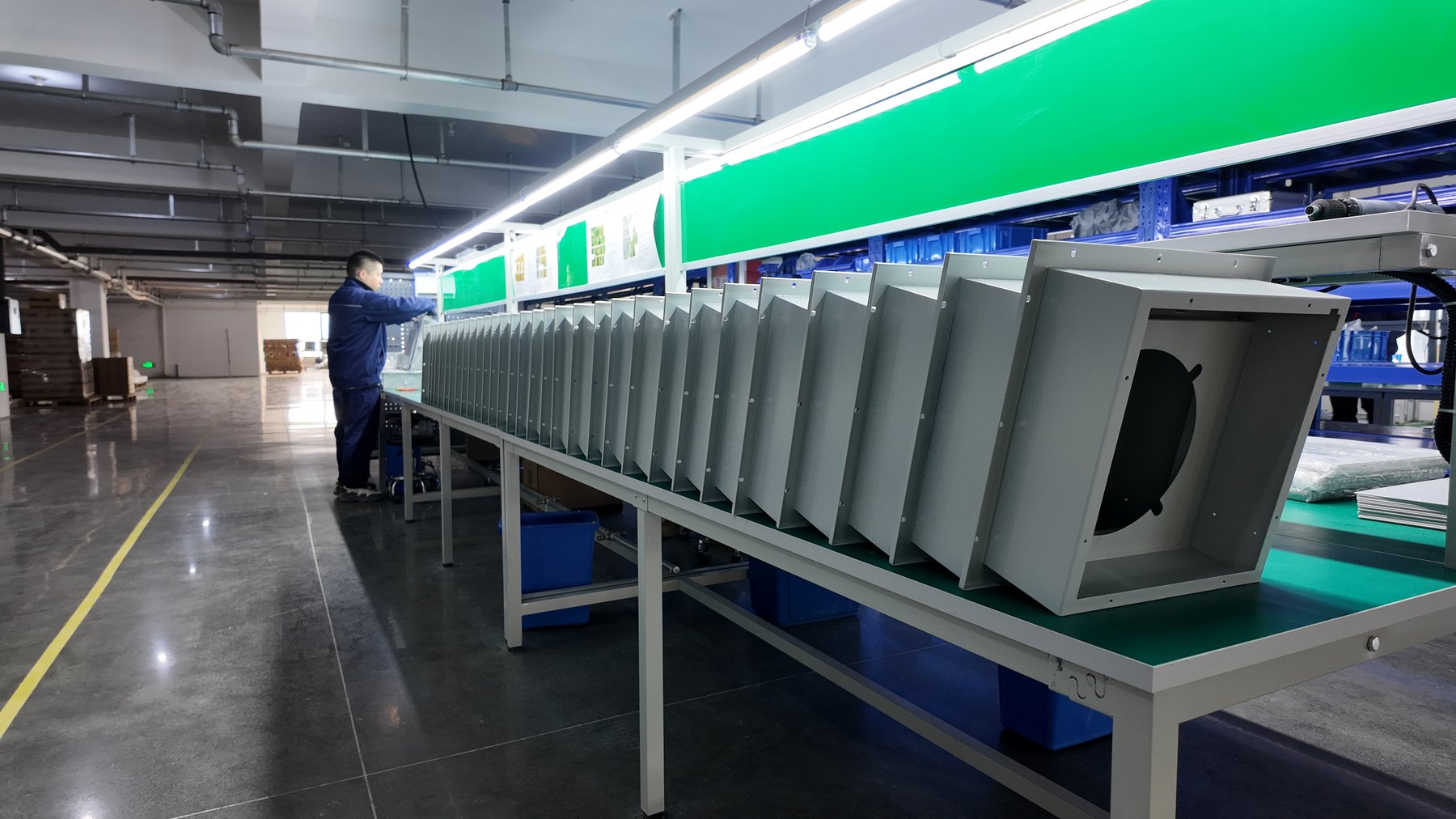
A solid compound that turns into a suppressing aerosol on ignition — stored at atmospheric pressure, so there is nothing to leak, nothing to recharge and no manifold to design.
A condensed aerosol generator holds a solid potassium-based compound. On activation it burns in a controlled way and releases a suspension of fine particles that interferes with the flame chemistry — the same suppression mechanism as a clean agent, delivered from a device that is stored at atmospheric pressure.
That single fact explains where these units belong: enclosures and volumes where a pressurised cylinder is impractical or unwelcome. Electrical cabinets, vehicle engine bays, small plant rooms, cable shafts, telecom shelters. It also explains where they do not belong: anywhere people remain during discharge, and anywhere the fine residue cannot be cleaned out of sensitive equipment.
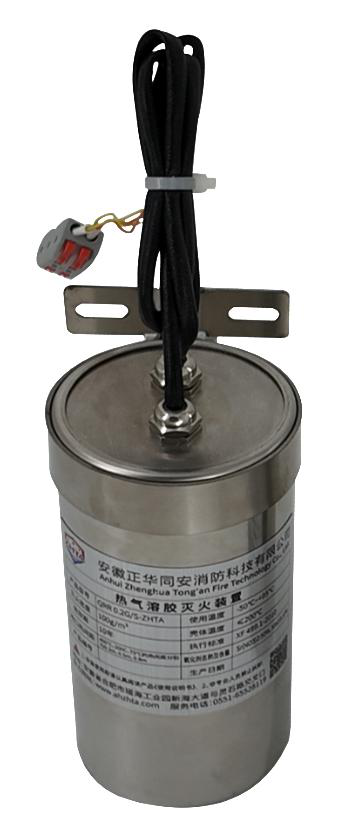
An S-type condensed aerosol device in a stainless canister: initiator, aerosol-forming agent, cooling path, feedback element and housing in one sealed body, with nothing stored under pressure.
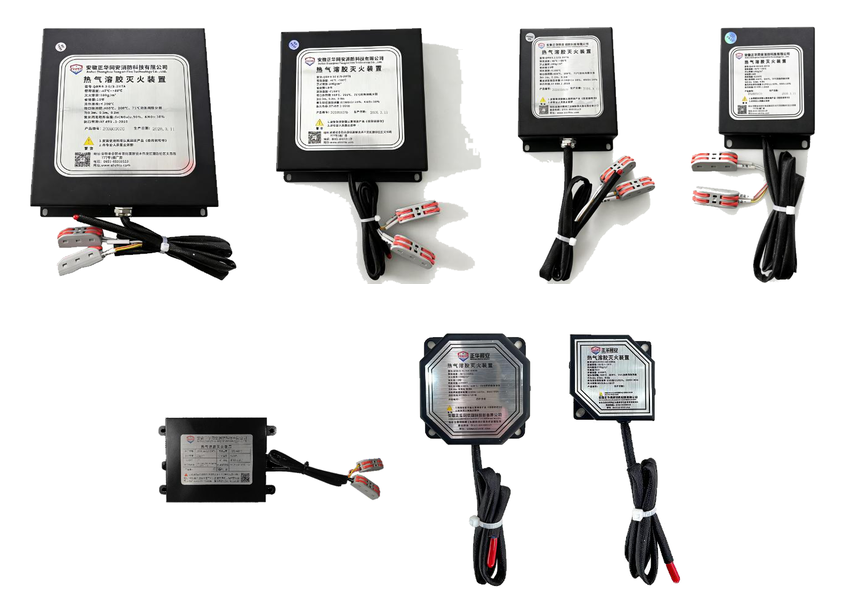
Seven charges on one platform — 0.01, 0.02, 0.04, 0.1, 0.144, 0.15 and 0.3 kg — in sealed flat housings 16 to 32 mm thick.
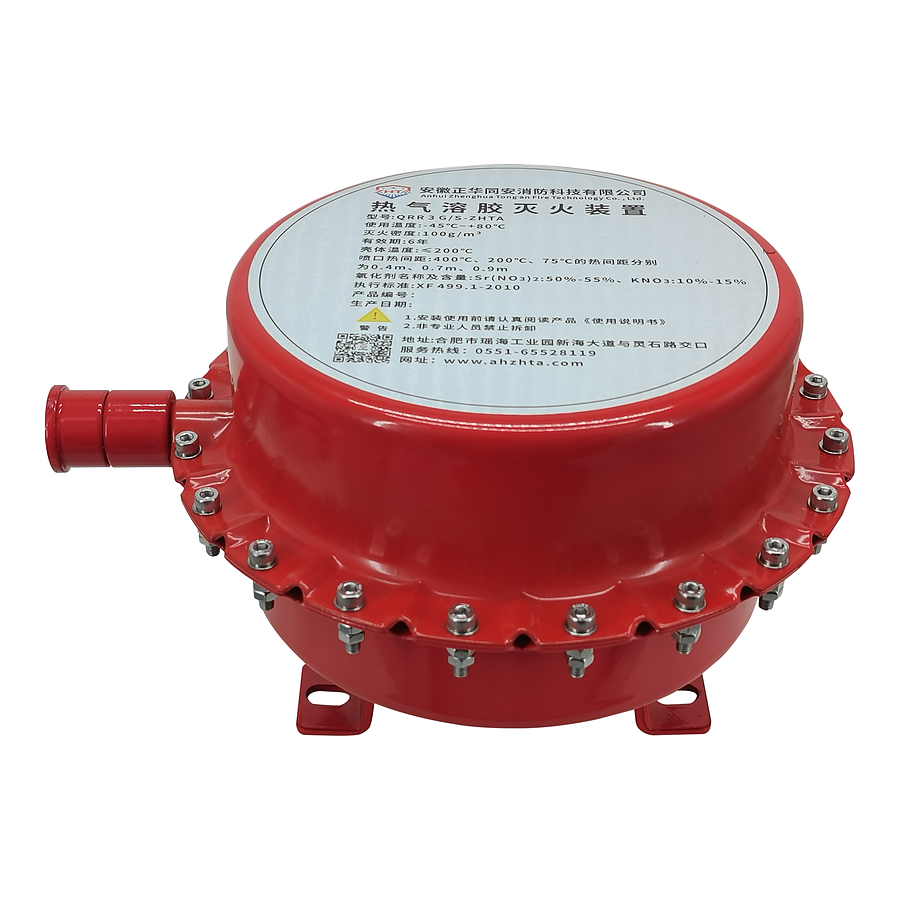
An S-type condensed aerosol generator built as a single round wall-mounted unit: a Ø235 mm body carried on a 350 mm mounting plate, with the initiator, aerosol-forming agent, cooling path, feedback element and housing sealed into one body that stores nothing under pressure.
The agent is the easy half. The decision that actually changes the quote is the mounting format and what has to be built around it.
The general-purpose body for a room or a large cabinet, mounted on a wall or a bracket with the outlet aimed at the hazard.
A low-profile body for shallow enclosures where a cylinder will not fit — under a floor, inside a trunking run, behind a panel.
A round body for small volumes and tight mounting positions, including CE-marked variants with electric activation and release feedback.
No. Aerosol systems are for enclosed, normally unoccupied volumes. The discharge produces a visible suspension and reduces visibility, and the residue has to be cleaned afterwards. For occupied spaces use a clean agent — HFC-227ea or FK-5-1-1.
A fine dry powder, mostly potassium salts. It is non-conductive and non-corrosive, and it is cleaned with a vacuum and a dry wipe. It does not etch boards the way water or wet chemical would, but it will settle into connectors and fans, so a cabinet that must stay in service needs a cleaning plan.
Either by a heat-sensitive cord that burns through at a set temperature, or electrically from a panel or a detector circuit. The electric versions provide a release feedback contact so the panel knows the unit fired.
The compound is stable and the units are rated for a ten-year service life with inspection rather than recharge. There is no pressure gauge to watch and no agent to top up, which is the operational argument for them in remote or unattended sites.
Send the room volume, the hazard and the standard you are designing to — NFPA, EN or GB — and the reply comes back with a sized system, a drawing set and a price, not a catalogue link.

Open WeChat, tap + and pick Scan — the code opens a chat with our export desk. Not on WeChat? Message us on WhatsApp instead.
On a phone you cannot scan your own screen — long-press the code above, save it to your album, then open WeChat → + → Scan → Album.