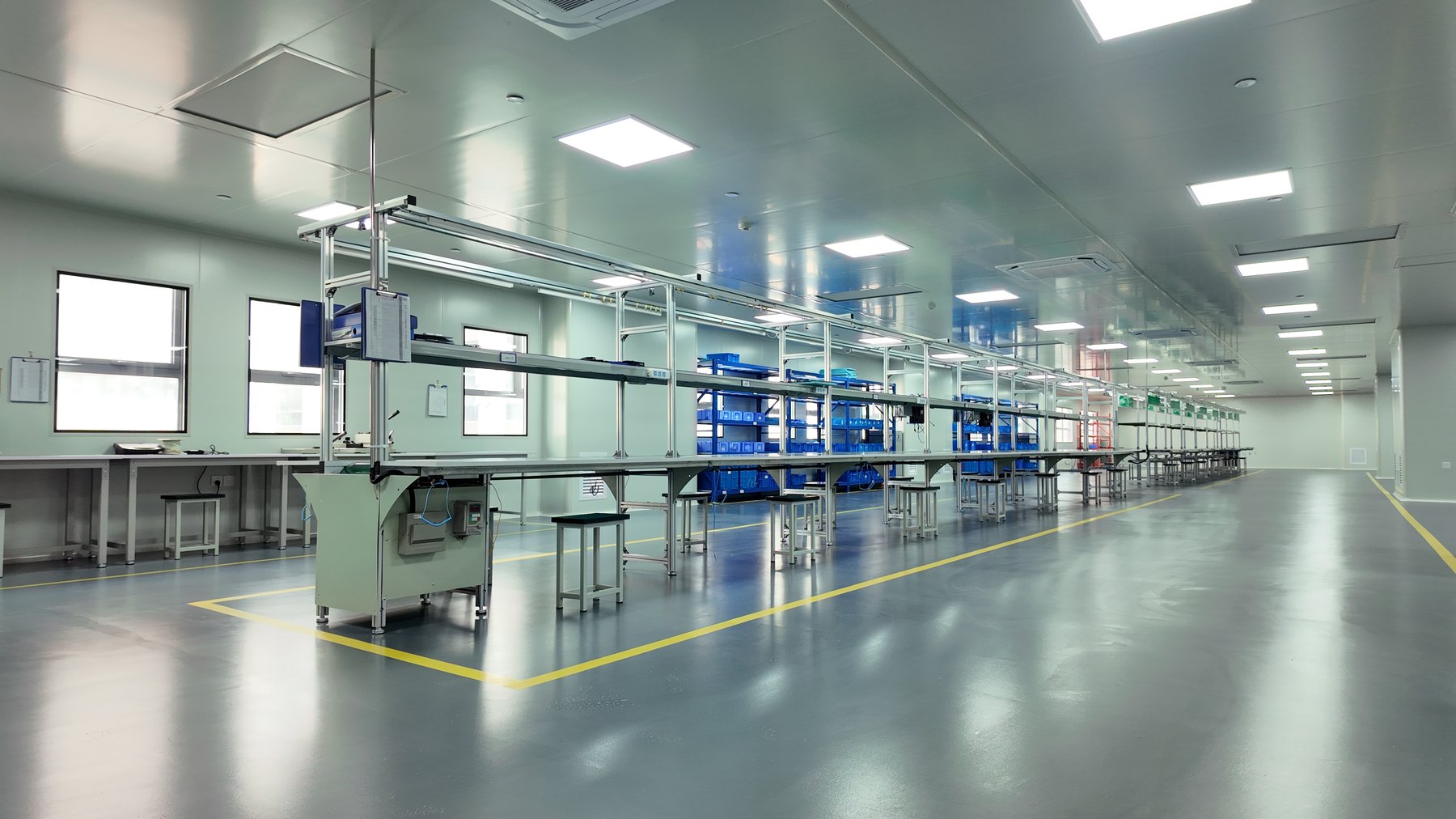
One agent, five mounting formats — so the same 2.5 MPa hardware covers a single cabinet, a ceiling void, one server rack or a whole electrical room.
HFC-227ea is a hydrofluorocarbon clean agent: non-conductive, non-corrosive, and it leaves nothing behind on the equipment it protects. In our systems it is stored at 2.5 MPa, discharged in 48–60 seconds, and designed for a 37.5% concentration in the protected volume — the figure our worked example for a 1,102 m³ electrical room arrives at.
The agent is the easy part. What decides a project is the mounting format: whether the room can host a cylinder, whether there is a ceiling void, whether the enclosure to be protected is a rack rather than a room, and whether there is power available at the point of risk. That is why the same agent appears here in five formats rather than one.
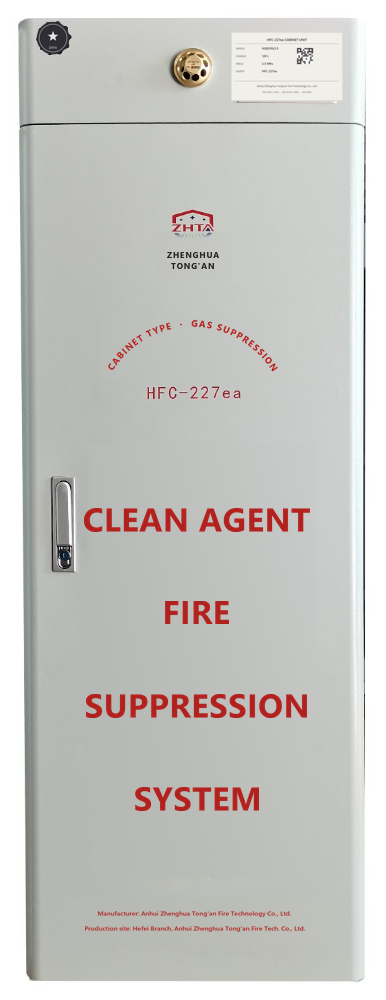
A pre-engineered unit: cylinder, container valve, nozzle and control mounted in one cabinet.
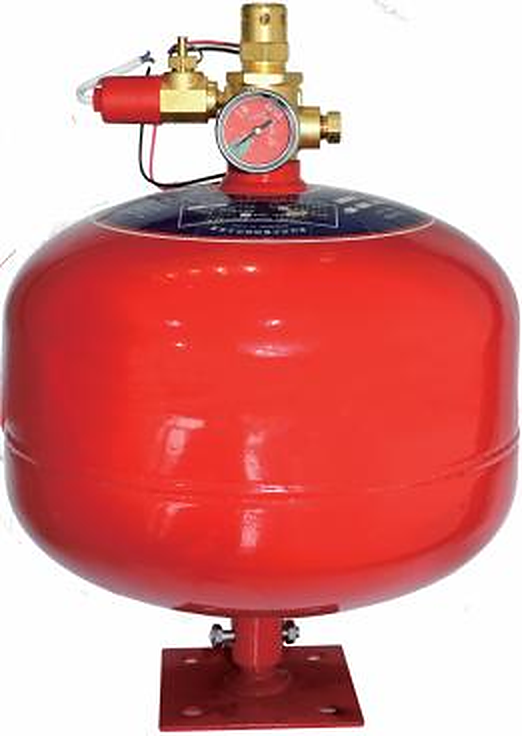
A self-contained unit built from an agent cylinder, container valve, solenoid actuator, nozzle, thermal glass bulb, pressure feedback switch and hanging bracket — suspended from the ceiling of the protected space.
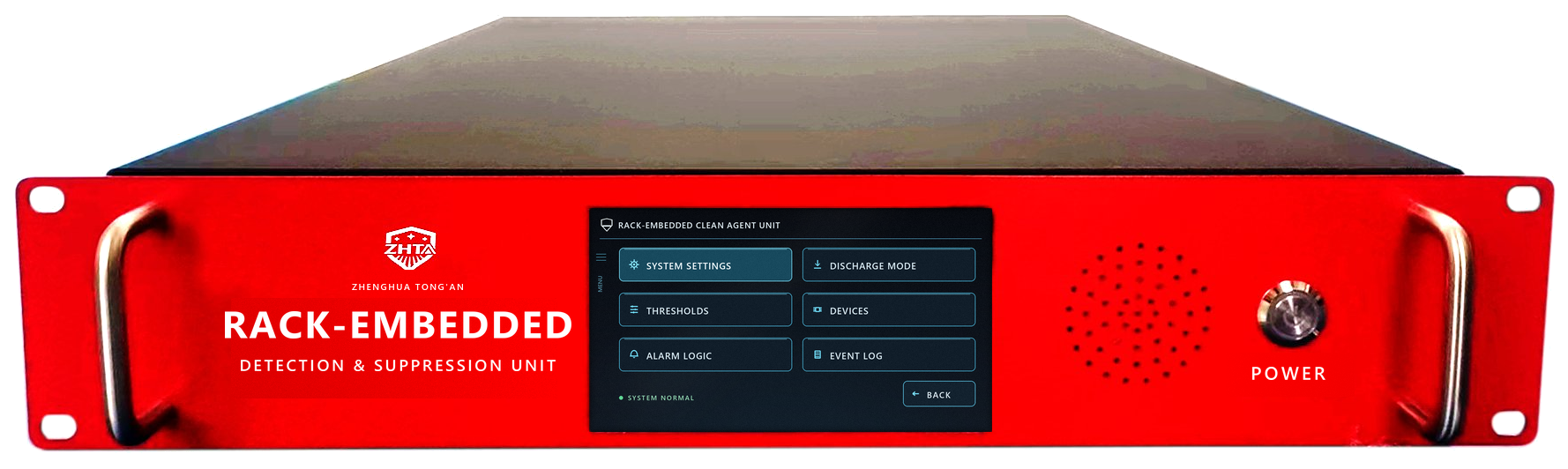
A 2U or 4U module that slides into the server rack and puts detection and total-flooding HFC-227ea suppression inside the cabinet itself — no pipework, no cylinder room, nothing mounted outside the enclosure.
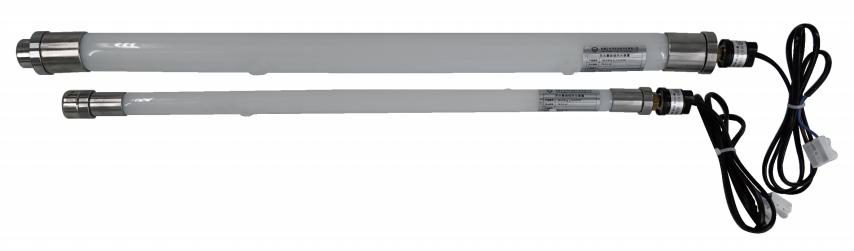
The tube is the detector, the nozzle and the switch.
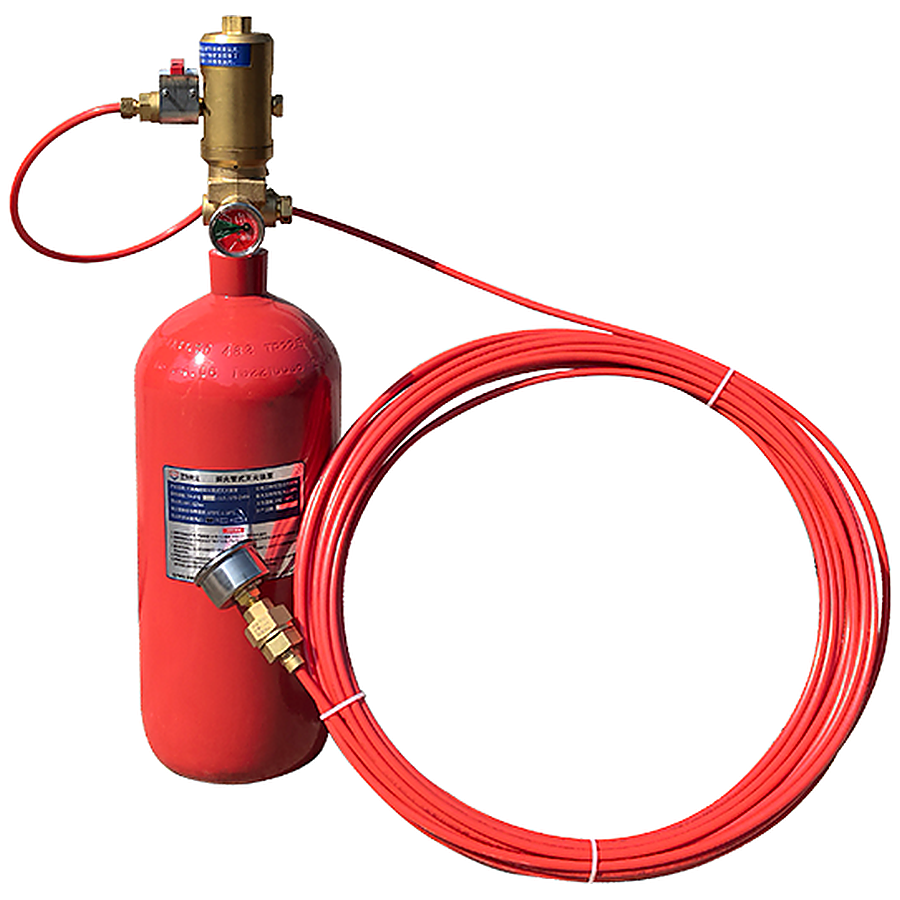
A cylinder-based detection tube system: the HFC-227ea sits in a seamless steel cylinder at 2.5 MPa and the tube leaves the container valve, threads through the space being protected and ends in a pressure gauge.
The agent is the easy half. The decision that actually changes the quote is the mounting format and what has to be built around it.
The default for a single room: cylinder, container valve, nozzle and control in one cabinet, wall or floor mounted. No cylinder room and no pipework, and the unit can be moved when the layout changes.
Suspended from the ceiling of a small enclosed space where floor area is already committed. Same components, hung where the fire risk is.
Protects the enclosure, not the room. Fitted inside the electrical or server rack, so discharge happens where the ignition is instead of filling the whole space.
No power, no panel, no wiring. The tube is detector, nozzle and release switch at once, and bursts at a set temperature directly over the seat of the fire.
It is used in normally occupied spaces, which is why the design concentration and the pre-discharge warning matter more than the agent choice. The system alarms before release and the concentration is held at the design figure rather than exceeded. Tell us the room volume and the standard you are designing to — NFPA 2001, EN 15004 or GB 50370 — and we return the calculation rather than a rule of thumb.
No. One unit protects one enclosed volume. Two rooms means two units, or a piped system with a selector valve if the rooms are never occupied at the same time — and that is a different product from the cabinet range.
Cabinet and hanging units run 7–15 days from order to a filled, pressure-tested unit. Detection tube units run 20–30 days because production and agent filling both sit inside that window. OEM and ODM supply is available on both.
Yes — cylinder sizing, nozzle layout, pressure-relief vent sizing and the submittal drawings are part of the supply, not an extra. Send the room dimensions, the hazard and the standard, and the package comes back ready for the consultant to review.
Send the room volume, the hazard and the standard you are designing to — NFPA, EN or GB — and the reply comes back with a sized system, a drawing set and a price, not a catalogue link.

Open WeChat, tap + and pick Scan — the code opens a chat with our export desk. Not on WeChat? Message us on WhatsApp instead.
On a phone you cannot scan your own screen — long-press the code above, save it to your album, then open WeChat → + → Scan → Album.