Lower storage pressure, a much larger safety margin, and a liquid that boils at 49 °C — the agent to specify when the protected space is normally occupied.
FK-5-1-1 — perfluorohexanone, sold elsewhere as Novec 1230 — is a fluoroketone. It boils at 49 °C, so it leaves the nozzle as a vapour rather than a fog, and it breaks down in the atmosphere in about five days. Global warming potential is 1 against 3,220 for HFC-227ea, which is usually the reason a project specifies it.
The engineering consequence of the low boiling point is a lower storage pressure: 1.6 MPa against 2.5 MPa, so thinner cylinders, a lighter manifold and a smaller footprint for the same agent mass. The cost consequence is the reverse — the agent itself is more expensive per kilogram — so FK-5-1-1 usually wins where space or safety margin is the constraint and loses where agent volume is large.
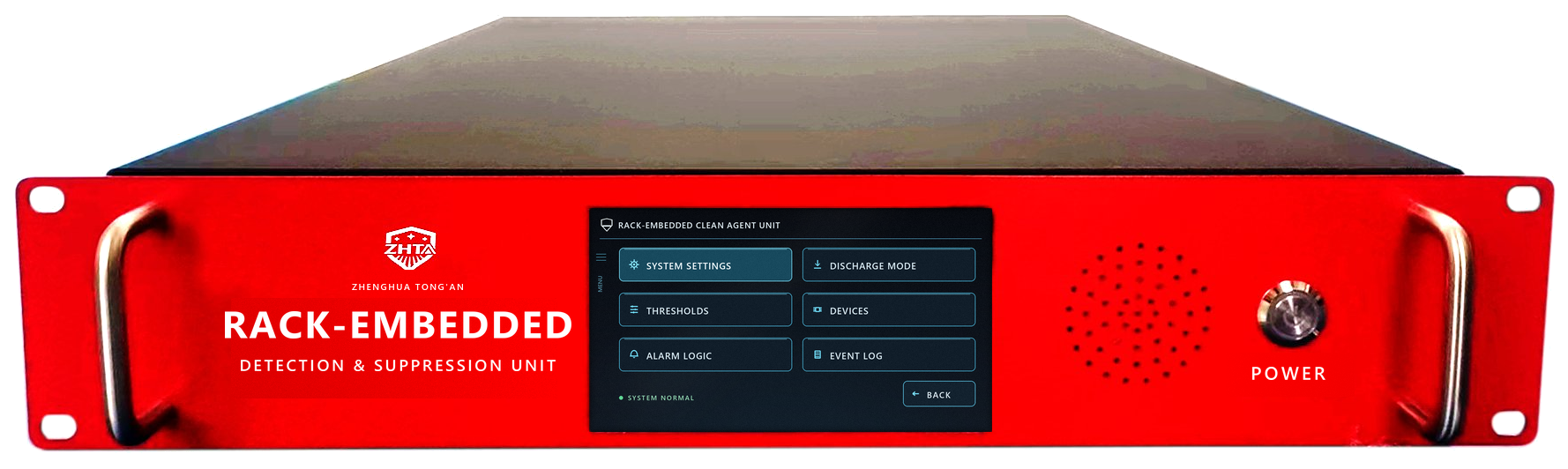
One 2U or 4U module, four parameter sets.
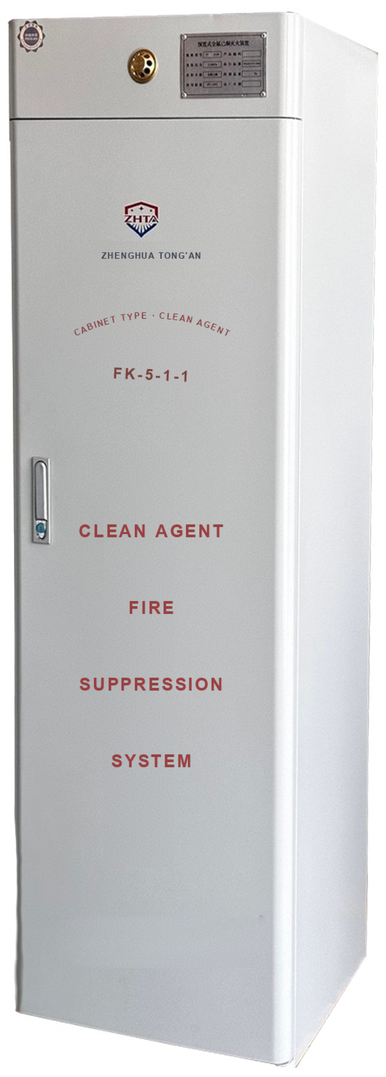
A pre-engineered cabinet built around a genuine FK-5-1-1 cylinder: container valve, nozzle, pressure gauge and release controls in one steel shell, supplied filled and pressure tested.
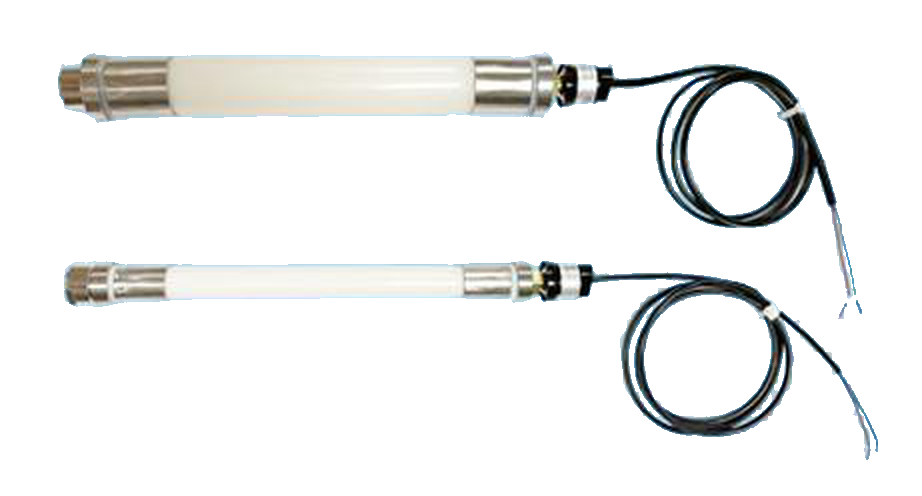
The tube is the detector, the nozzle and the pressure vessel.
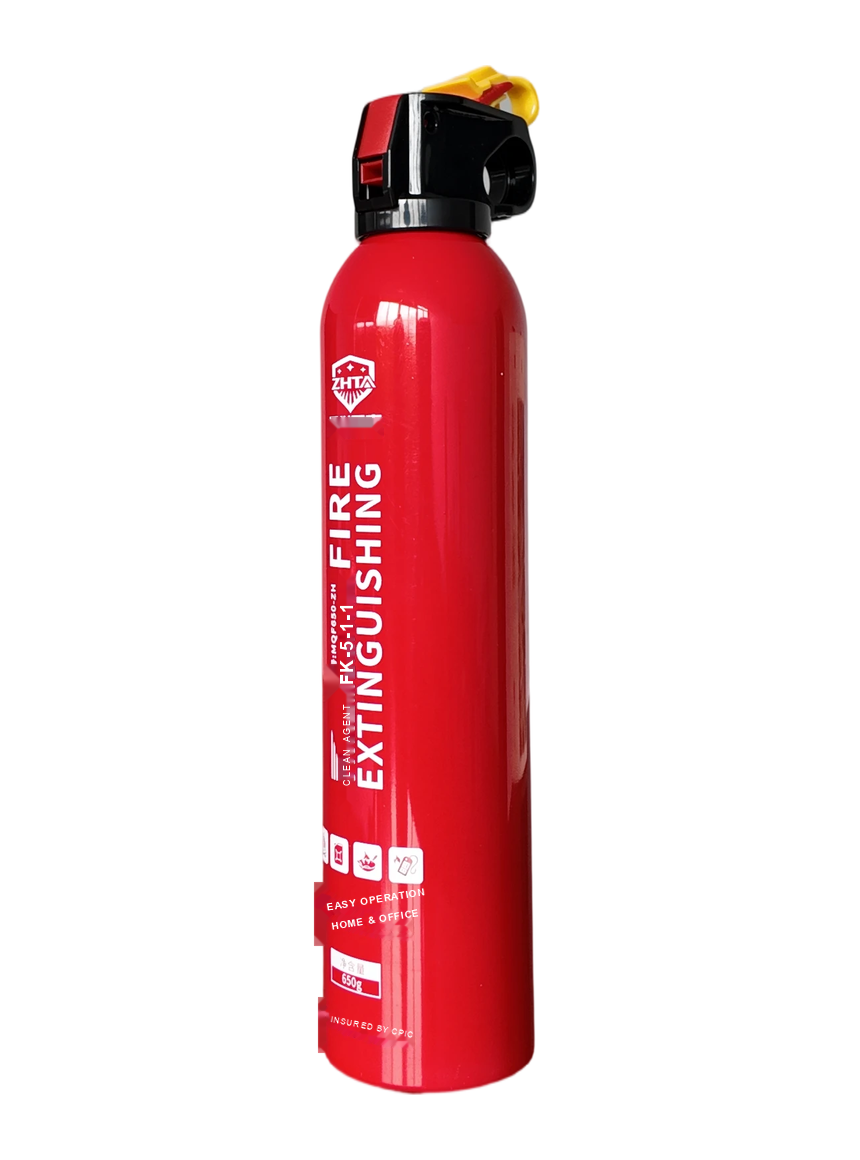
A 650 g can of FK-5-1-1 with a pull-and-press head: the first response for a fire that has just started.
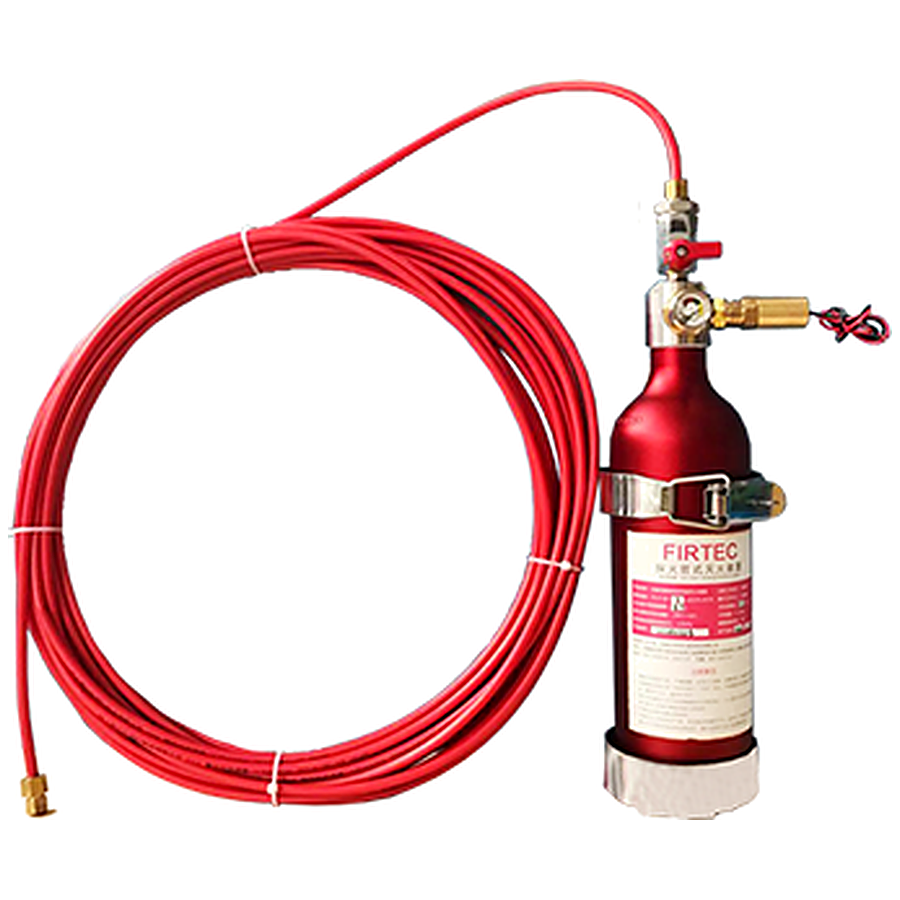
A cylinder-based detection tube system for FK-5-1-1: the agent is stored in the container at 1.6 MPa, the tube leaves the container valve and runs through the protected space, and a check valve with pressure display closes the line.
The agent is the easy half. The decision that actually changes the quote is the mounting format and what has to be built around it.
Prefabricated cabinet unit for one room or enclosure. Same no-pipework, no-cylinder-room logic as the HFC cabinet range, at the lower storage pressure.
Fitted inside the rack it protects, for server and electrical enclosures where flooding a whole room would be both wasteful and slow.
Tube-operated, no electrical supply. A 750 g charge in a unit small enough to sit inside a cabinet or a control box.
A 650 g aerosol spray for first response on a localised fire, not a fixed system. Useful where a client wants a manual capability without piping.
Start from volume and occupancy. Below roughly 500 m³ in a normally occupied room, FK-5-1-1 usually wins on safety margin and cylinder footprint. Above that the agent cost dominates and HFC-227ea is the cheaper system for the same protection. Send the volume and we will price both rather than argue the point.
It is the usual drop-in for halon in occupied spaces: similar discharge behaviour, far lower pressure than the old halon hardware, and no ozone depletion. The cylinders and valves are not interchangeable, so a halon decommissioning normally means new hardware, not a refill.
No. The MQF650 is a first-response tool for a person who is present when a fire starts. It has no detection, no automatic release and no hold time — it does not satisfy a code requirement for total flooding.
A declaration of conformity, the type test report and the material compliance statement. The CE-marked members of this family are listed separately on the CE products page, because not every FK-5-1-1 unit in the range carries the mark.
Send the room volume, the hazard and the standard you are designing to — NFPA, EN or GB — and the reply comes back with a sized system, a drawing set and a price, not a catalogue link.

Open WeChat, tap + and pick Scan — the code opens a chat with our export desk. Not on WeChat? Message us on WhatsApp instead.
On a phone you cannot scan your own screen — long-press the code above, save it to your album, then open WeChat → + → Scan → Album.