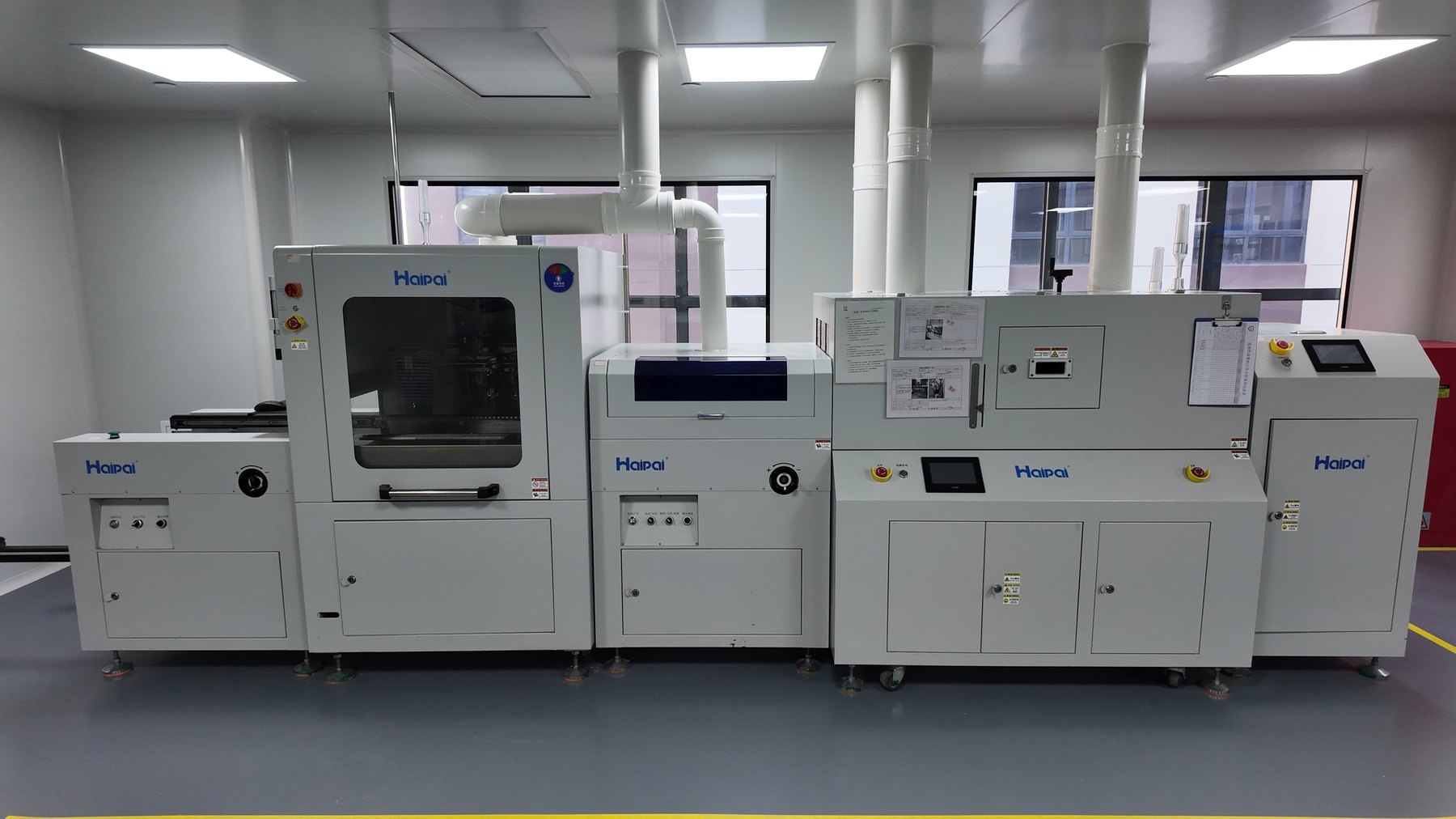
Suppression without detection is a guess. These are the two sensing layers we supply: point gas detection at the leak, and air-sampling smoke detection before there is visible smoke.
Every suppression decision depends on a signal, and the signal is only as good as the sensor that produces it. The GTYQ is a catalytic combustion detector for combustible gas: it reads 3–100 %LEL and puts the value out on RS485, CAN or a 4–20 mA loop, so it drops into a new system or an existing controller without a converter.
The ASD is the other end of the timeline. It draws air continuously from a pipe network into a laser chamber and reports at three alarm thresholds, so it sees the smoke that has not yet reached a point detector on the ceiling — the reason it is specified in cable rooms, cold aisles and anything with a high airflow that would dilute a point sample.
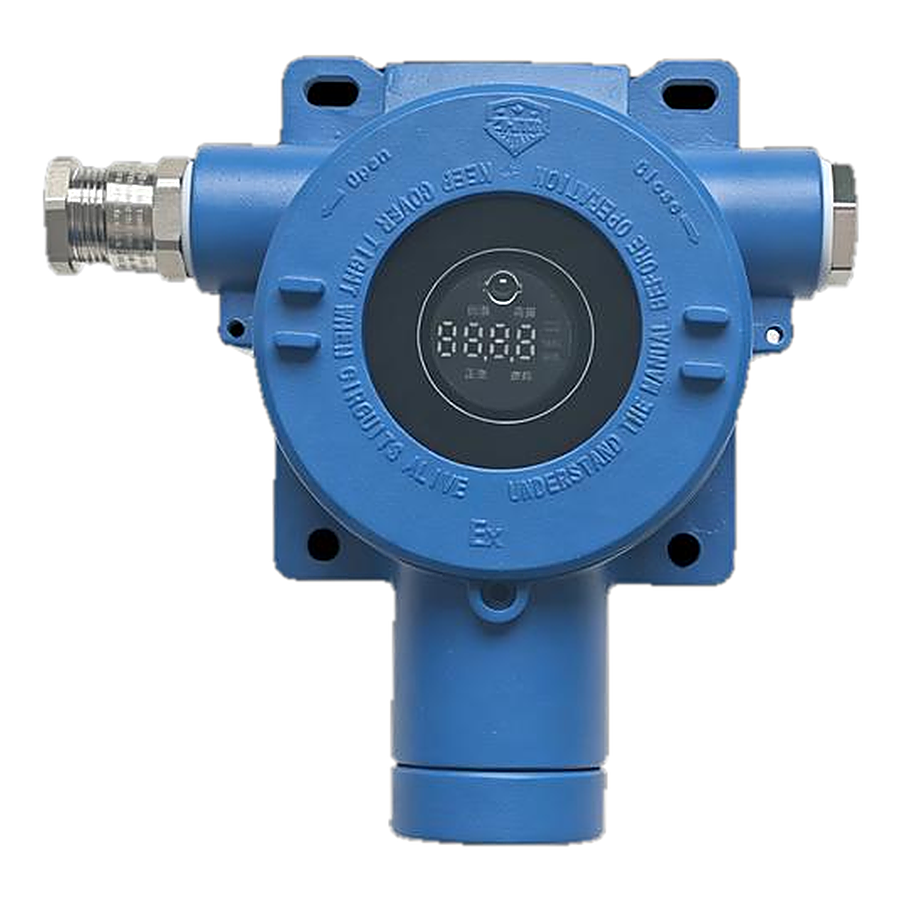
An explosion-proof point detector for combustible gas: a catalytic combustion sensor measures 3–100 %LEL and the reading goes out on RS485, CAN or a 4–20 mA loop, so the unit drops into a new loop or an existing controller without a converter.
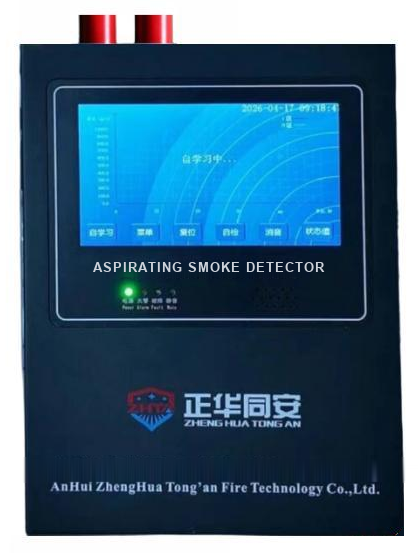
A laser optical air-sampling detector: the unit pulls air out of the protected space through a pipe network and reads it in a detection chamber, so it sees smoke long before it reaches a ceiling detector.
The agent is the easy half. The decision that actually changes the quote is the mounting format and what has to be built around it.
Catalytic sensor, explosion-proof housing, address and calibration set by infrared remote so the flameproof enclosure is never opened in the hazardous area.
Laser optical air sampling with 1,000× the sensitivity of a point detector, continuous airflow supervision and a 40,000-event log for post-incident review.
Because lithium-ion failure announces itself in stages: venting, then off-gas, then smoke, then flame. A gas or off-gas signal arrives minutes before a smoke detector sees anything, which is the difference between isolating a module and suppressing a fire. Detection is what turns a suppression system from a last resort into an early intervention.
Point detectors are cheaper and simpler where the ceiling is low, airflow is gentle and access for testing is easy. Aspirating detection wins where the ceiling is high, where airflow would dilute a point sample, where access is difficult, or where you need the earliest possible warning — data halls, cable tunnels, atria and cold storage.
The GTYQ offers RS485, CAN and a 4–20 mA loop; the ASD offers relays and a communication interface. Both are designed to sit on a third-party panel rather than requiring ours, which is usually what a consultant wants on a refurbishment.
Yes — the composite detector combines smoke, heat, CO, VOC and hydrogen channels in one unit, which is the combination battery storage actually needs. It is listed on the CE products page together with its three-state indication.
Send the room volume, the hazard and the standard you are designing to — NFPA, EN or GB — and the reply comes back with a sized system, a drawing set and a price, not a catalogue link.

Open WeChat, tap + and pick Scan — the code opens a chat with our export desk. Not on WeChat? Message us on WhatsApp instead.
On a phone you cannot scan your own screen — long-press the code above, save it to your album, then open WeChat → + → Scan → Album.